Beyond Tradition: The Evolution of Indonesian Matcha
Matcha is known as an important part of Japanese culture, but few know that Indonesia also has great potential in producing high-quality matcha. In fact, in some historical narratives and local practices, there are stories that Japanese-style tea processing techniques were introduced during the Japanese occupation of Indonesia.
Over time, the combination of these techniques and Indonesia's unique natural conditions created opportunities for the birth of high-quality local matcha that is no less impressive.
The Beginning: Japanese Influence in Indonesia
During the Japanese occupation of Indonesia (1942–1945), there was a lot of cultural and knowledge exchange, including in agriculture. In some stories circulating among tea farmers, it is said that Japanese soldiers introduced finer tea processing techniques, including tea leaf grinding methods that resemble matcha.
Although historical documentation is limited, this narrative has become part of the story of tea development in Indonesia, especially in mountainous areas which have long been centers of tea plantations.
Indonesia's Natural Conditions Supporting Matcha Production
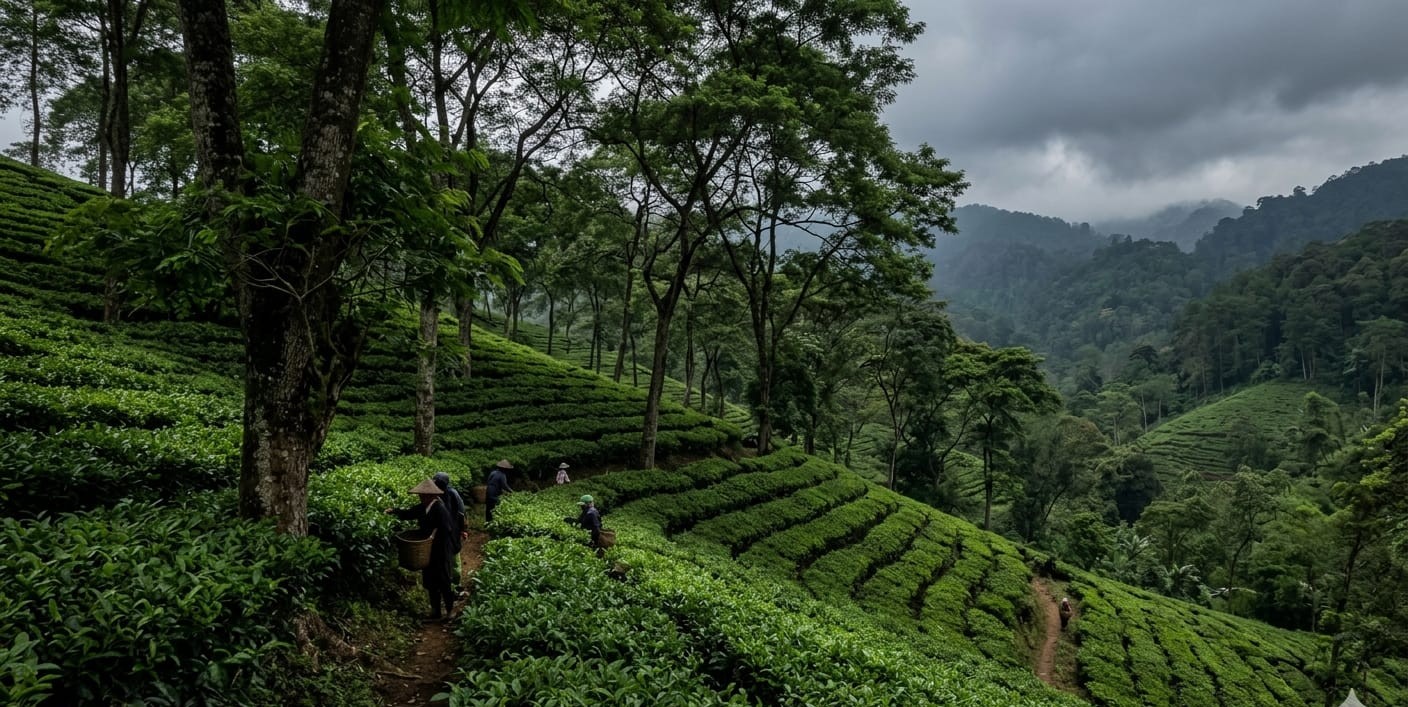
One of the main factors that makes Japanese matcha high-quality is the shading technique before harvest. Tea leaves are covered from direct sunlight to increase chlorophyll and L-theanine content.
Interestingly, Indonesia's geographical conditions can naturally create a similar effect.
1. Natural Shading by Vegetation
In several tea plantation areas in Indonesia, trees such as:
- Sengon (Albizia chinensis)
- Erythrina (dadap)
are used as natural protectors. These trees create shade that helps reduce direct sunlight exposure, similar to shading techniques in Japan.
2. Hill Slopes and Geographical Position
Many tea plantations in Indonesia are located:
- On mountain slopes
- Behind mountains
- With specific planting angles
These conditions prevent direct sunlight from hitting the plants all day. This effect indirectly resembles traditional Japanese techniques in cultivating matcha.
3. Altitude and Tropical Climate
Indonesian tea plantations are generally located in highlands with cool temperatures and stable humidity. These conditions are ideal for producing high-quality tea leaves with a milder taste.
Halal Process as an Added Value
In addition to natural factors, Indonesia has another advantage in matcha production, which is a process that can be adapted to halal standards.
In the matcha production process:
- No non-halal additives are used
- Processing can be controlled according to halal standards
- Suitable for the global market, especially Muslim countries
This is an added value that is not always the main focus in other countries.
The Quality of Indonesian Matcha: On Par with Japan?
With a combination of:
- Evolving cultivation techniques
- Supporting natural conditions
- Clean and halal production processes
Indonesian matcha has great potential to compete in the global market.
Some advantages of Indonesian matcha include:
- A lighter and more acceptable taste
- Strong natural green color
- High nutritional content
- More competitive prices
Although Japan is still the gold standard for matcha, developments in technology and knowledge in Indonesia have increasingly improved the quality of local products.
Transformation to the Modern Era
In recent years, matcha in Indonesia is no longer just a tea raw material, but has evolved into part of a modern lifestyle.
Matcha is now available in various forms:
- Matcha lattes in coffee shops
- Matcha-based desserts
- Health and wellness products
- Ready-to-drink beverages
Local brands have started elevating matcha as a premium product, even with a distinctive Indonesian identity.
Local Matcha Innovations
Indonesia is also known for its creativity in combining matcha with local ingredients, such as:
- Palm sugar matcha (Matcha gula aren)
- Coconut milk matcha (Matcha santan)
- Coffee matcha (fusion drink)
- Matcha with traditional spices
These innovations create a new identity that distinguishes Indonesian matcha from other countries.
Challenges in Developing Indonesian Matcha
Despite having great potential, the Indonesian matcha industry still faces several challenges:
1. Market Education
Many consumers still do not understand the difference between:
- Authentic matcha
- Regular green tea
- Flavored matcha products
2. Quality Standardization
Consistent standards are needed for Indonesian matcha to compete in the international market.
3. Global Branding
Japan is already very strong in matcha branding. Indonesia needs to build its own identity.
The Future of Indonesian Matcha
With the increasing trend of healthy lifestyles and global demand for natural products, the future of Indonesian matcha looks very promising.
If supported by:
- Better production technology
- Consumer education
- Strong branding
Indonesia has the potential to become one of the important players in the global matcha industry.
Conclusion
The journey of matcha in Indonesia is a blend of history, nature, and innovation. From the narrative of technique introduction by the Japanese to adaptation with local conditions, Indonesian matcha has evolved into a unique product.
With the support of natural environments such as shading by sengon and erythrina trees, as well as mountainous geographic conditions, Indonesia has a natural advantage in producing high-quality tea leaves.
Coupled with the halal process and local innovations, Indonesian matcha is not just an alternative, but also has the potential to become a strong competitor in the global market.